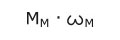
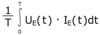
Our outboards reach by far the highest overall efficiency.
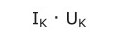
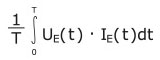
One of the most important performance figures for an outboard motor is its overall efficiency, which indicates the percentage of the input power used that is actually available as propulsion power, taking all losses into consideration.
In the case of electric outboards, the overall efficiency is even more important. As batteries have only a fraction of the energy density of petrol, the battery capacity almost always represents a limiting factor on the performance and range of an electric propulsion system.
A higher overall efficiency therefore means that the battery capacity is used more effectively, improving the speed and range of the boat. Overall efficiency values for electric outboards and trolling motors vary between 18 and 56%, i.e. by a factor of 3 or more.
In all the power classes it covers, Torqeedo holds the world record for overall efficiency. In other words, no other outboard motor transforms the energy stored in the battery into thrust and speed as effectively as a Torqeedo motor.
In the case of petrol outboards, the overall efficiency is not such an essential performance figure; thanks to the high energy density of petrol, low efficiency can easily be compensated by high fuel consumption. The overall efficiencies of small petrol outboards are therefore especially poor, at only 5-10%. This means that as much as 90-95% of the petrol in your tank is wasted and only a very small portion is actually converted into useful power.
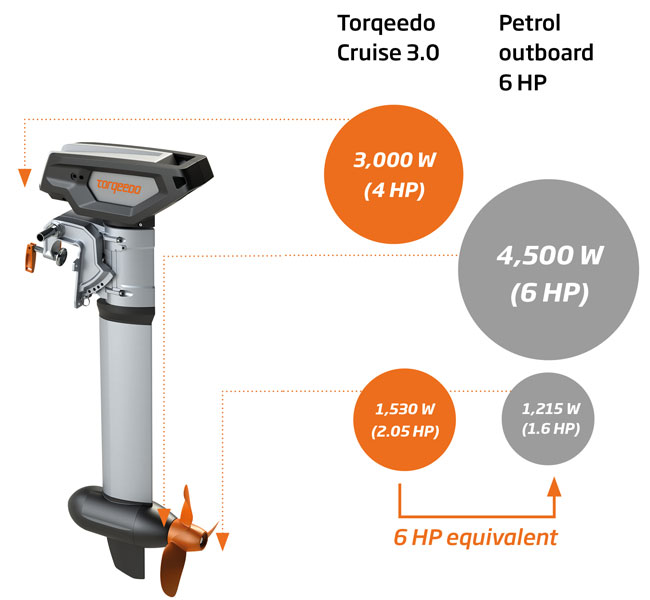
Propulsive power and overall efficiency rates of various outboards.
Schiffbau Versuchsanstalt Potsdam confirms unmatched efficiency of Torqeedo outboards Following the completion of internal tests and the successful market introduction of our motors in Germany, Austria and Switzerland, we wanted independent confirmation and sent two of our outboard motors to Schiffbau-Versuchsanstalt (SVA) in Potsdam for testing. The independent experts at SVA tested and confirmed the unique propulsion power of Torqeedo motors compared with competitors' products under laboratory conditions. Since it was established more than 50 years ago, SVA has become an internationally recognized research and consultancy institute for commercial shipping. 45 highly specialized experts in a number of different areas as well as test facilities and measurement systems in line with international standards have reinforced the position of SVA as a research centre and an accredited test laboratory recognized throughout the world. As a result of the popularity of German DIN standards in many countries of the world, most countries now use the German horsepower (Pferdestärke - PS). This applies to South and Central America, India, Japan and the entire European continent. Examples (with the normal abbreviation in brackets) include: These units all correspond to the German PS and can be converted to and from kW using the following factors 1 kW = 1.360 PS or 1 PS = 0.7355 kW The "horsepower" often used in the UK and the USA is a slightly different unit. The conversion factors are 1 kW = 1.341 HP or 1 HP = 0.7457 kW or 1 PS = 0.986 HP Static thrust is not a power value but a force. The official unit in countries which have adopted the SI system (practically all countries apart from the USA) is the Newton (N) or the older kilogram-force/ kilopond (kp). In the USA as well as in the marine boating sector in the UK, the pound-force (lbf) is still widely used. The conversion factors are: 1 N = 0.1020 kp = 0.2248 lbf 1 kg = 9.807 N = 2.205 lbf 1 lbf = 4.448 N = 0.4536 kp
» A big test for little engines
» Conversion of power figures